
ICP
  • About
    • ICP for Programs, Financiers, and Green Banks >
      • GHG Accounting
      • Adaptive Reuse
      • Certification Timing
      • Post-Cert Changes
    • How Does ICP Work? >
      • Project Framework
      • Roadmap to IREE Certification
    • GGRF EPA Reporter
    • Tech Forum >
      • Technical Forum Blog
      • Discussion Notes
      • Call Recordings
      • Reference Documents
      • Glossary
      • Acronyms
      • Protocol Archives
    • ICP in Canada
    • Contact Us
  • Training
  • IREE Certification
    • Guide to IREE Certification
    • Commercial Protocols >
      • Large Commercial
      • Standard Commercial
      • Targeted Commercial
      • Basic / Performance
    • Multifamily Protocols >
      • Large Multifamily
      • Standard Multifamily
      • Targeted Multifamily
      • Basic / Performance
    • Project Development Specification
    • Project Registration >
      • Performance Update
    • Tools and Templates >
      • Cx, O&M, M&V Templates
      • QA Checklists
      • Building Button
    • Case Studies
  • Providers
    • Project Developer Network >
      • Join the ICP PD Network
    • Quality Assurance Assessors >
      • Join ICP's Quality Assurance Asserssors
  • Blog
    • Blog
    • ICP In the News

ICP recommended for federal EE projects

1/24/2018

Comments

 
Picture
The General Services Administration High Performance Building Adoption Task Group, an advisory committee of both federal and nonfederal experts, has released a letter with a set of recommendations to accelerate the adoption of high-performance federal buildings, focusing on upgrading existing buildings.

The letter advised projects to adopt national standards, such as the Investor Confidence Project (ICP), a global underwriting standard for developing and measuring energy efficiency retrofits for commercial and multifamily residential buildings. ICP is administered by GBCI and was conceived, incubated and developed by the Environmental Defense Fund as a way to leverage and replicate best practices in the public and private sector.
​

The recommendations to the GSA centered around addressing transaction cost barriers, as well as streamlining the project development and contracting process to create confidence and consistency in project returns. The committee also discussed mechanisms to allow energy performance contracting and energy efficiency to reach smaller buildings that are often too small for most Federal Energy Management Program (FEMP) contractors.

The ICP system and its Investor Ready Energy Efficiency™ (IREE) certification addresses many of the core issues that have made it hard to scale energy efficiency across diverse portfolios of buildings. By standardizing how projects are developed and reviewed, it becomes easier to roll out efficiency with confidence, ensuring consistent quality with lower transaction costs. The ICP system specifically works to increase investor and building owners confidence in the financial and environmental performance of commercial and multifamily buildings.

ICP’s recognition by the GSA advisory group follows on the heels of a report from a committee of Canada’s House of Commons, the Canadian Federal Standing Committee on Finance, that also included ICP as a tool to drive opportunities for targeted retrofit investments for federally funded buildings. The report, “Driving Inclusive Growth: Spurring Productivity and Competitiveness in Canada,” encourages projects to embed ICP as a requirement in the Low-Carbon Economy Fund, the Canada Infrastructure Bank and the National Housing Strategy, three of the central Canadian governmental programs to address energy use in buildings.
​
This combined effort is an indication of ICP’s ability to deliver a consistent approach to energy efficiency retrofitting across markets. Having a standard framework that is consistent in the United States and Canada will help create a more efficient market that will benefit building owners, investors and the efficiency industry. To learn more about ICP and IREE certification, visit the ICP website or contact us via email.

adv_comm_hpba_advice_ltr_12-15-17.pdf
File Size: 908 kb
File Type: pdf
Download File

Comments

Canadian Federal Standing Committee on Finance Recommends ICP

12/14/2017

Comments

 
Picture
The Canada Green Building Council (CaGBC) is pleased to see the Federal  Standing Committee on Finance pre-budget consultation report (Driving Inclusive Growth: Spurring productivity and competitiveness in Canada) includes recommendations for zero carbon buildings, targeted retrofits for federally-owned buildings and green skills development.
​
Among recommendations originally proposed by CaGBC, the Government is specifically recommending adopting zero carbon building standards and creating opportunities for targeted retrofit investments for federally-owned buildings. To this end, the government says it should buy zero carbon technology in bulk, and embed the Investor Confidence Project (ICP) as a requirement in the Low-Carbon Economy Fund, the Canada Infrastructure Bank, and the National Housing Strategy.

The Federal recommendations also include targeted investments in skills development to strengthen apprenticeship and training programs in order to ensure sufficient labour resources to meet the evolving needs of the economy, including support for green trades.

“We are encouraged to see our recommendations supported in the Standing Committee’s pre-budget consultation report,” says Thomas Mueller, President and CEO of the CaGBC. “In recognizing the importance of green jobs training, building investor confidence in retrofits, and pursuing zero carbon performance, the federal government is demonstrating leadership in the development of Canada’s low carbon economy. We look forward to continuing our work with the Government to deliver on these efforts.”

In May 2017, CaGBC released Canada’s first Zero Carbon Building Standard, a world-class program that positions Canada as a global leader, offering designers and operators the opportunity to make carbon reduction the key indicator for building performance.

Spearheaded in Canada by CaGBC, GBCI and MaRS Discovery District, ICP is a global underwriting standard for developing and measuring energy efficiency retrofits. Its Investor Ready Energy Efficiency certification (IREE) signals to investors that a project has adopted best practices that can help reduce transaction costs and increase savings. The protocols offer investors a consistent roadmap for assessing risk and expected outcomes from deep retrofits.

CaGBC’s Education Strategy is focused on increasing capacity in the Canadian green building industry through the development and delivery of specialized education, including zero carbon building education. CaGBC offers zero carbon building education for the trades through the delivery of its Green Professional Building Skills Training (GPRO). It also offers professional courses focused on CaGBC’s Zero Carbon Building Program.

Comments

Announcing the Launch of ICP Canada

10/4/2017

Comments

 
Picture
The Canada Green Building Council (CaGBC), Green Business Certification Inc. (GBCI), and the Advanced Energy Centre at MaRS Discovery District (MaRS) announced today that they are working together to bring the Investor Confidence (ICP) Project and its Investor Ready Energy Efficiency (IREE) certification to Canada.

ICP is a global underwriting standard for developing and measuring energy efficiency retrofits and is administered by GBCI. Its IREE certification signals to investors that a project has adopted best practices that can help reduce transaction costs and increase savings. The protocols offer investors a consistent roadmap for assessing risk and expected outcomes from deep retrofits.

The IREE certification is currently being used by project owners, investors, engineers and insurance companies in North America and Europe. Energy efficiency programs such as Pacific Gas and Electric’s On-Bill Financing Program, the New Jersey Board of Public Utilities Pay4Performance Program, the Connecticut Green Banks Commercial Property Assessed Clean Energy program, the United Kingdom’s Carbon and Energy Fund and others are also applying the IREE certification.

In the Pan-Canadian Framework, the Canadian federal government recognized the role that retrofitting buildings will play in reaching Canada’s targeted emissions reductions. The CaGBC and GBCI are bringing ICP to Canada to facilitate the mass retrofits required to achieve these goals. The IREE-certified projects will provide clarity on the long-term performance of energy efficiency technologies and provide the necessary assurance required to create greater access to competitive financing which will be necessary to achieve retrofits on a large scale.

“As our recent A Roadmap for Retrofits in Canada report found, Canada’s existing building stock has the potential to reduce overall building emissions by up to 51 per cent by 2030. The biggest barrier for the industry and ownership is access to financing,” says Thomas Mueller, President and CEO of the CaGBC and GBCI Canada. “We believe that the ICP can play a critical role in the acceleration of Canada’s retrofit economy by instilling investor confidence in green retrofits and by providing a tested, ready-made tool that government and industry can leverage to accelerate uptake across the country.”

Supported by the Ministry of Energy in Ontario, the Advanced Energy Centre at MaRS is partnering with CaGBC and GBCI to pilot the ICP methodology for the Canadian market. The pilot will bring together a multi-sectoral group that includes owners, government, engineering firms, utilities and financial institutions with the goal of determining how ICP can help facilitate more retrofits in Canada. The pilots will also help inform the accreditation and certification services for Investor Ready Energy Efficiency projects, which will be delivered by GBCI Canada. 

 “The Advanced Energy Centre is pleased to play a role in introducing the Investor Confidence Project and supporting the IREE Certification’s launch in Canada,” says Shawn Peterson, Senior Associate of the Advanced Energy Centre at MaRS. “Our cities need innovative financing mechanisms for improving building performance at scale. Ontario’s large concentration of institutional real estate, financial capital and support to invest in low-carbon building solutions makes it an ideal market for investors.”

The next steps for the ICP program in Canada will be the recruitment of Canadian projects for IREE certification in February 2018, and then the initiation of a pilot in summer 2018. For more information on ICP in Canada, visit the MaRS Discovery District website.

Comments

PG&E Adopts ICP for 0% On-Bill Financing

8/3/2017

Comments

 
Picture
PG&E’s On Bill Finance (OBF) providing 0% loans for energy efficiency projects is now available and leverages the Investor Confidence Project’s (ICP) Investor Ready Energy Efficiency™ (IREE) certification process.  ICP, PG&E, and ARUP will be hosting a webinar to explain how to use the ICP process to qualify for this program on August 23rd at 2 pm (Pacific Time Zone).
 
This expansion of the On-Bill Financing (OBF) program beyond the PG&E incentive programs is designed to give customers and project developers more control and flexibility in the way they take advantage of the OBF product.  PG&E has chosen to implement the ICP System in lieu of spending time and resources to develop a set of proprietary technical requirements.   Furthermore, PG&E benefits from the ability to utilize credentialed ICP providers for its quality assurance process providing greater flexibility and a more streamlined approval process.

Picture
ICP continues to be integrated into more programs across the nation as a growing number of programs in New Jersey, Connecticut, California, Texas, and other states recognize the value that ICP brings to programs which includes:
  • Industry tested best practices and a pathway to success for participants
  • Reduced costs to implement and maintain technical requirements
  • Quicker processing of project reviews and program approvals
  • Access to ready made networks of project developers, QA providers, and investors
  • Ability to easily transition to market-based solutions for technical reviews.
  • Increased confidence in savings by owners and investors resulting in increased program uptake
 
If you are in PG&E territory and interested in learning how to take advantage of this unique opportunity which offers up to $4m of funding please register for this event and/or add the August 23rd 2017 event to your calendar.  If you would like to learn more about becoming an ICP Credentialed Provider, how ICP can apply to programs in other territories, or about ICP’s Investor Ready Energy Efficiency Certification please contact ICP.

Comments

ICP Now Available In Four Languages

1/27/2017

Comments

 
We are pleased to announce the release of three ICP Protocols in the Bulgarian, German and Portuguese languages, now available through the ICP Europe website.
The Energy Performance Protocols are the cornerstone of the ICP System. They define a standardised roadmap of best practices for developing energy retrofits following the ICP Project lifecycle. They leverage existing and commonly accepted European and national standards in conjunction with ICP specified elements, procedures, and documentation based on the various stages of a project life-cycle to create standardised projects with reliable returns.

The ICP Protocols cover commercial (tertiary) and multifamily (apartment block) building energy efficiency projects. The first IREE™ project, an NHS three-building hospital in Liverpool, UK, was certified in June 2016 and used the ICP Standard Tertiary Protocol. Since then project developers, funds and frameworks have started using ICP Protocols in projects in the UK, Germany, Portugal and Austria.

If you’d like to learn more about the ICP System and how to use the Protocols in your country, don’t hesitate to contact the appropriate national contact. 
Comments

Announcing the ICP Building Button

12/12/2016

Comments

 
Picture
The Investor Confidence Project (ICP) is proud to announce the launch of the “Building Button,” a new initiative that standardizes data from commercial and multifamily energy efficiency projects.  The Building Button Specification enables market participants including investors, building owners, and developers to publish, share, amalgamate, and analyze project level data.  This is a first for the industry which has up until now been characterized by a distinct lack of available data which has inhibited the realization of the industry's full potential.

The Building Button Specification leverages the U.S. Department of Energy’s Lawrence Berkeley National Laboratory’s (LBNL), Building Energy Data Exchange Specification (BEDES) to create a standardized dictionary of terms and definitions that define energy efficiency data in a common language. The specification is built around three use cases: Technical Due Diligence, Financial Underwriting and Actuarial Data.  The use cases allow any organization to share project data across platforms in a common language to reduce underwriting costs, build trust in energy savings, and drive market demand for energy efficiency.  The specification also maps to the full range of commercial and multifamily ICP Protocols to facilitate data collection for ICP Investor Ready projects offering investors and building owners increased confidence in energy savings backed by empirical, project-level data across multiple projects.

Picture
The Building Button Specification was created by a large stakeholder group consisting of project developers, technology providers, investors, insurers, program administrators and other market actors who helped develop the specification by identifying and evaluating all the possible data associated with an energy efficiency project.  ICP would like to thank LBNL, participating stakeholders, and ICP technical forum members who contributed towards bringing this specification to market.  

The LBNL Building Energy Data Exchange Specification (BEDES) team has allocated engineering resources to make adoption of Building Button easy and cost free.  For stakeholders that collect or distribute building energy performance data the BEDES team can provide free technical assistance to companies by mapping their data sets into Building Button / BEDES data spec. Once this mapping process is complete, users of Building Button and BEDES will be recognized by DOE/LBNL on the web site and in communications materials, and featured in events, conferences, press releases, success stories, etc.  Sign up to be contacted about this exciting offer.

Picture
The release of the Building Button Specification is the first step towards the reality of standardized industry-wide "big data" for the energy efficiency industry.  ICP is calling on all those interested in energy efficiency data to participate in further development of this opportunity through upcoming webinars, technical forums and more.  Learn more about how to join the effort here!

Comments

Why ICP Europe is gaining momentum

12/6/2016

Comments

 
Picture
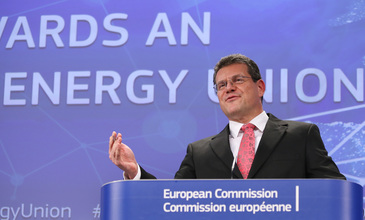
On the 30th November the European Commission published today the “Winter Package,” a major energy policy update, which references the Investor Confidence Project Europe (ICP Europe) as a “best practice” to maximize environmental performance in new buildings and buildings requiring energy efficiency upgrades.

The “Winter Package” is a set of new legislative proposals aimed at creating a European Energy Union and focused on reducing the Union’s dependence on energy imports and on fighting climate change. As a priority it is proposed that energy efficiency targets for 2030 should be set at 30% compared to 1990 levels. The building industry is the largest energy consumer in the EU, with buildings using 40% of total energy consumption and representing 36% of its CO2 emissions. Building renovations represent a massive opportunity for massive investment which as well as achieving energy security and climate gains will create jobs, boost GDP, produce better living spaces and reduce consumers’ bills.

In this context, the Investor Confidence Project Europe brings efficient tools to enable the growth of the building energy efficiency retrofit market, still nascent in Europe and to date mainly supported by public capital. ICP Europe is a sister project of the Investor Confidence Project launched five years ago in the United States by Environmental Defense Fund to standardise energy efficiency upgrades in a way that reduces due diligence costs and performance risks. Projects that follow the ICP system are accredited against industry standards and best practices, and can be certified as Investor Ready Energy Efficiency™ (IREE™). This increases transparency and  confidence in savings which can help engage private capital and scale up energy efficiency investments globally.

“Today’s endorsement will accelerate energy efficiency deal-flow and help us reach the €100 billion per year needed to meet the European Union’s 2020 energy efficiency target,” said Panama Bartholomy, Director of ICP Europe. “Together with our Investor Network, and our partnership with Green Business Certification Inc., ICP is on its way to becoming the premier global underwriting standard for energy efficiency projects around the world.”

Paul Hodson, Head of the European Commission's energy efficiency unit, said: “The potential of the Investor Confidence Project to develop good practice in de-risking energy efficiency investments has been recognised and described in the Commission Staff Working Document on Good practice in energy efficiency, that will accompany the Energy Efficiency Directive legislative proposal to be adopted on 30 November. The ICP approach addresses the needs of investors looking for standardised projects that reduce the time, risk, and costs involved in funding energy efficiency building retrofits.” With a European market for energy efficiency worth €60-100 billion, the ICP System is particularly relevant to investors. "Standardized energy upgrade approaches such as ICP accelerate project progress, facilitating a more structured project development approach, which greatly enables access to financing’, said Lada Strelnikova, Director Deutsche Asset Management and Investment Manager for the European Energy Efficiency Fund (eeef), which provides financing for energy efficiency projects in the public sector in Europe.  

ICP Europe has launched its IREE™ Certification in June 2016 and a first project developed by the Carbon and Energy Fund was certified in Liverpool, UK.

Interested parties can find more information on ICP Europe’s Investor Network here. For further details, please email [email protected].  

Comments

Breaking Down Barriers to EE at European Utility Week

12/2/2016

Comments

 
Picture
Engerati’s Adam Malik discusses with Panama Bartholomy, Director of ICP Europe, the challenge of attracting investment into building energy efficiency projects. Bartholomy outlines the certification programme that allows global investors to know that forecasted energy savings will be achieved.

Comments

ICP and GBCI Join Forces

10/4/2016

Comments

 
Picture
On behalf of the Investor Confidence Project, I am excited to announce a new partnership with the Green Business Certification, Inc. (GBCI) to create a scalable platform that will establish ICP as the global underwriting standard for energy efficiency projects.

I want to personally thank our many stakeholders for helping us reach this critical milestone. It’s one thing to embrace the idea of improving confidence in the performance of energy efficiency projects. It’s another thing entirely to do the hard work necessary to make it happen. ICP’s working group members, Ally Network, Investor Network, Certified Providers, partners, and other stakeholders have made this possible.

​
Our work together over the past three years has brought ICP to a point where it will now become part of GBCI’s world-renowned portfolio of building certifications and professional credentials and certificates, including the Leadership in Energy and Environmental Design (LEED) green building rating systems, the PEER standard for power systems, the WELL building standard, the Excellence in Design for Greater Efficiencies (EDGE) program, the Sustainable Sites Initiative (SITES®) and the Global Real Estate Sustainability Benchmark (GRESB).

Picture

As ICP has continued to gain adoption in both the US and Europe, this new partnership represents a critical and exciting step forward. Starting in the new year, GBCI will assume responsibility for administering the ICP system and will carry forward standards development, credentialing, training and certification to establish ICP as a key component of the GBCI portfolio.  

GBCI brings global staffing resources, systems, and relationships that will strengthen the brand and expand the reach of ICP, and enable us to achieve a true, worldwide standard to unlock the potential of energy efficiency. We could not ask for a better partner in this effort.

The core ICP team, who you are used to working with, will continue to operate as part of GBCI and little will change from an operational perspective. The remainder of this year we will be working with EDF and GBCI to define future governance and undertake long-range strategic planning.

All of you, as our key stakeholders, partners, and contributors, have been a huge part of ICP’s success and your continued input and support is critical. We will keep you all in the loop as more details come to light.

Thank you for all your contributions to date, and consider this the start of a new and exciting chapter for ICP.  Onwards!
Comments

ICP Launches New OBF Pilot with PG&E

8/17/2016

Comments

 
Picture
Environmental Defense Fund’s Investor Confidence Project (ICP) recently announced Pacific Gas and Electric (PG&E), the largest utility in the United States, has received approval from the California Public Utilities Commission to accelerate energy efficiency retrofits in existing buildings by providing interest-free loans to projects that follow ICP’s rigorous protocols. ICP Protocols define industry best practices for energy efficiency project development and a credentialing system that includes third-party validation.

“Together, ICP and PG&E are welcoming a new era of market-driven energy efficiency performance,” said Matt Golden, Project Director for EDF’s Investor Confidence Project. “By establishing a series of benchmarks and best practices for the retrofitting of existing buildings, ICP slashes transaction costs, accelerates project timelines, and shows a clear path to profitability for the finance and performance contracting sectors.”

Customers participating in PG&E’s On-Bill Financing program, which provides interest-free loans for energy efficiency projects, can now make upgrades based on measured energy savings via SmartMeter™ technology. For this new pilot, customers will work with energy performance contractors who use ICP’s Investor Ready Energy Efficiency™ (IREE) certification. This certification brings rigorous measurement and verification metrics to energy efficiency retrofit projects, standardizing the way such projects are developed and brought to market — and making them more attractive to investors and building owners alike.

 PG&E’s On-Bill Financing program offers qualifying businesses interest-free loans ranging from $5,000 to $100,000, or up to $250,000 for government agencies. Supporting the energy efficiency provisions of recent California state legislation Assembly Bill 802, this new On-Bill Financing pilot could increase investment in energy efficiency retrofits across California, and provide a model for similar efforts in other states.

“Standardization is key to attracting the capital necessary to meet energy efficiency’s true potential, achieve climate targets, and generate financial returns,” said Andy Darrell, chief of strategy for global energy and finance at EDF. “PG&E’s new pilot with EDF’s Investor Confidence Project is a step toward making the vision of bringing energy efficiency to market a reality.”

EDF’s Investor Confidence Project, which came to fruition in 2014, is also running a pilot through the New Jersey Board of Public Utilities (NJBPU), and is the standard for property-assessed clean energy loans (PACE) in the state of Texas. Additional ICP programs for building owners, investors, and performance contractors exist in a half-dozen other states in the U.S. and across the European Union.
 For more information on the Investor Confidence Project, visit www.EEperformance.org.

Comments
<<Previous
Forward>>

    RSS Feed

    Archives

    April 2025
    November 2024
    May 2024
    July 2023
    July 2021
    June 2019
    March 2019
    March 2018
    January 2018
    December 2017
    October 2017
    August 2017
    January 2017
    December 2016
    October 2016
    August 2016
    July 2016
    June 2016
    April 2016
    March 2016
    February 2016
    January 2016
    December 2015
    November 2015
    October 2015
    September 2015
    August 2015
    July 2015
    June 2015
    April 2015
    March 2015
    February 2015
    December 2014
    November 2014
    October 2014
    September 2014
    July 2014
    June 2014
    May 2014
    April 2014
    March 2014
    February 2014
    January 2014
    December 2013
    November 2013
    October 2013
    September 2013
    August 2013
    July 2013
    June 2013
    May 2013
    March 2013
    January 2013
    December 2012
    October 2012

    Categories

    All
    179d
    25e
    Ab758
    Benchmarking
    California Energy Commission
    Carbon Credit
    Cec
    Credentialing
    Edf
    Eepp
    Energy Software
    Femp
    Icp
    Insurance
    Leasing
    Low Income Weatherization
    Measurement And Verification
    M&V
    Pace
    Performance
    Ppa
    Risk Management
    Software
    Software Providers
    Solar
    Tax Credits
    Ump
    Uniform Methods Project
    Wap

Contact the Project