
ICP
  • About
    • ICP for Programs, Financiers, and Green Banks >
      • GHG Accounting
      • Adaptive Reuse
      • Certification Timing
      • Post-Cert Changes
    • How Does ICP Work? >
      • Project Framework
      • Roadmap to IREE Certification
    • GGRF EPA Reporter
    • Tech Forum >
      • Technical Forum Blog
      • Discussion Notes
      • Call Recordings
      • Reference Documents
      • Glossary
      • Acronyms
      • Protocol Archives
    • ICP in Canada
    • Contact Us
  • Training
  • IREE Certification
    • Guide to IREE Certification
    • Commercial Protocols >
      • Large Commercial
      • Standard Commercial
      • Targeted Commercial
      • Basic / Performance
    • Multifamily Protocols >
      • Large Multifamily
      • Standard Multifamily
      • Targeted Multifamily
      • Basic / Performance
    • Project Development Specification
    • Project Registration >
      • Performance Update
    • Tools and Templates >
      • Cx, O&M, M&V Templates
      • QA Checklists
      • Building Button
    • Case Studies
  • Providers
    • Project Developer Network >
      • Join the ICP PD Network
    • Quality Assurance Assessors >
      • Join ICP's Quality Assurance Asserssors
  • Blog
    • Blog
    • ICP In the News

ICP Inter-Connect Fires Up Local SF Energy Efficiency Network!

11/14/2014

Comments

 
Picture
Kind of like “speed dating” for energy efficiency finance, the Investor Confidence Project (ICP), in collaboration with San Francisco Department of the Environment and Pacific Gas & Electric, got together over 70 local project developers with energy efficiency investors for the first ever SF InterConnect EE Networking event, at the San Francisco Department of Environment on November 12th.  Each investor had exactly 5 minutes to speed pitch the crowd on their product, what it is, how it works, and what kind of projects they were looking for - or be interrupted by the dreaded rooster alarm timer.

This event is an example of the Investor Confidence Project and SF Environment’s partnership to deploy ICP’s Investor Ready Energy Efficiency™ system as the Recommended Best Practice for their Commercial PACE, Benchmarking, and Multifamily retrofit programs.  This system leverages the ICP protocols for project standardization, existing professional requirements, and the ICP Credentialing System to produce projects that increase the confidence of building owners and investors in project engineering fundamentals and the reliability of project returns.

Picture
SF Inter-Connect Sponsers
Picture
Perhaps most importantly, a good time was had by the lively crowd which appeared to take full advantage of the casual networking format that was the main focus of the event.  ICP’s goal was to facilitate deal flow by connecting local contractors, installers, engineers, and project developers with investors such as PACE finance firms, insurance providers, energy service companies, and utility and city financing and incentive programs.  

Based on feedback from investors who seemed satisfied with a hefty stack of business cards in hand, we feel like the event was a success.  With numerous participants asking when the next Inter-Connect will take place, the only question is when and where.   So stay tuned!  

Comments

Six ICP Software Providers Guaranteed to Make Your Life Easier 

11/12/2014

Comments

 
Picture
As part of the launch of the ICP Software Provider Credential, ICP hosted a great webinar with our new Credentialed Software Providers. If you are interested in learning more about tools that are available to help Project Developers and Investors develop, manage, and de-risk efficiency projects, you came to the right place.  This webinar is a great way to get a quick introduction to some of the best tools in the market. If you missed it, it is not too late: we had the forethought to record it.  

The webinar features the initial six software vendors who are participating in the program.  The format provided an introduction to the program and requirements, a short mini-presentation by each participating vendor, and then segued into a roundtable discussion regarding standardization and automation featuring Chris Valle (Performance Systems Development), Josh Duncan (Noesis Energy), Brian McCarter (Sustainable Real Estate Solutions), Ramsay Stevens (NECAP-ECAP), Bradley Mauersberg (Encentiv Energy), and Pierre Trevet (HELiOS Building Efficiency).   

ICP is excited to be working with such a great group of organizations and send out a thanks to all of our panelists for their participation.  The webinar can be viewed below or here on the ICP Youtube channel.

Comments

How to Use the Project Development Specification (its easy)

11/11/2014

Comments

 
Picture
The ICP Project Development Specification (PD Spec) can be a bit intimidating. Clocking in at 67 pages, it can seem a bit overwhelming. So we wanted to explain how to use the PD Spec as a tool for project developers and quality assurance professionals in your day-to-day application of ICP and as a useful tool to help you do your job.

If you are a Project Developer, this is your cheat-sheet. You can go to the specification for a clear narrative and detailed resources that lay out exactly what is being asked of you, and what it will take to develop an ICP compliant project.

If you are a Quality Assurance Provider (either an independent engineer or working within a program), the PD Spec represents the “right” answers. So when you evaluate a project for compliance, you can evaluate each step relative to a fixed target.

Using The ICP Project Development Specification

First off, you do NOT need to print out the Specification and read it from cover-to-cover (though you are free to do so if you please!).

Instead, we have reissued all of our ICP Protocols to include links after each requirement that direct you to the relevant section of the PD Spec to explain exactly what is required. So as you prepare a project using the protocols as your guide, you can easily jump from whatever protocol you are using directly to the appropriate section of the PD Spec to find out in detail what is required.

Give it a TRY!  below is a version of our Large Commercial v1.2a protocol. Scroll down to any section of the document, pick a requirement and look for a link like this: [PD sec X.Y.Z]. That link connects every requirement directly to the relevant section of the PD Spec. Give it a click and watch the magic happen!

Comments

Is Residential PACE BACK?  FHFA Drops Its Opposition

11/8/2014

Comments

 
Picture
After years of opposition to residential Property Assessed Clean Energy (PACE), FHFA may have reversed course this week and will no longer oppose PACE financing for residential customers. 

If the report below is true, this overturns a long held position that virtually shut down PACE ambitions during the Recovery Act, and frankly setback residential energy policy a decade. Even though we may now be back on track, billions were wasted in both public and private investment, and many early private companies failed when the promise of PACE financing for all disappeared due to FHFA's resistance to PACE the first time around.

I am writing to inform you that FHFA is not prepared to change its position on California's first-lien 
PACE program and will continue to prohibit the Enterprises from purchasing or refinancing mortgages 
that are encumbered with first-lien PACE loans.  

-  Snip from May 1, 2014 letter from Melvin L. Watt Director of FHFA to Governor Brown of CA
However, why look back?  Lets look forward!

According to a report in Asset-Backed Alert the Federal Housing Finance Agency (FHFA) has reached an agreement that would allow Fannie and Freddie to buy mortgages for homes that have a PACE assessment, so long as lenders agree to repurchase any loans that default.  Apparently, while the agreement has been struck, FHFA has yet to officially rule - but this is still huge progress!

Residential PACE in California has been back in action in "pirate" form through the HERO program in Southern California (run by Renovate America) for the last few years, and has over $250 Million in funded projects under its belt, and an extremely successful securitization.  The Sonoma County Energy Independence Program (SCEIP) has also been continuing to move forward with residential PACE, though not at the same volumes as HERO. SCEIP and HERO just thumbed their nose at FHFA and essentially saying, 'this is a local issue, we are just going to prove it in the market.'

Earlier this year, California at large went back into the Residential PACE business, with the Governor establishing a loan loss reserve through California Alternative Energy Advanced Transportation Financing Authority (CAEAFTA). 

Now in addition to Renovate America and the HERO program, Renewable Funding is leveraging the California First network that already covers 2/3 of the population of the State, and has been actively rolling out residential PACE for at least the last quarter. AllianceNRG which is a partnership between Counterpointe Energy Solutions, Deutsche Bank, and Leidos Engineering is also becoming active in residential PACE in California.

All in all, this is great news for energy efficiency and renewable energy in the residential sector, and we thank FHFA for coming to its senses and recognizing the great benefit of PACE as a way to allow homeowners to make improvements to their homes that create real cash-flows and lasting value.

Given the massive energy and carbon embodied in America's 128 million existing homes, getting residential PACE back on track is a critical step forward towards local job creation and a clean energy economy.  

Better late than never! 
Comments

Investor Confidence Project Goes Global with Introduction of ICP Europe

11/5/2014

Comments

 
Picture
Environmental Defence Fund Europe/UK today rolled out the Investor Confidence Project Europe (ICP Europe), which is aimed at boosting private sector investment in European building renovations.  

The ICP Europe initiative was officially announced to European leaders from the financial, engineering, and government communities at an event in Brussels during an important week, when two of the European energy efficiency industry’s largest events were held – Renovate Europe Day and Building Performance Institute of Europe ‘s Efficiency Investors Day.

ICP Europe Launch Event, Brussels Belgium
Picture
The potential for renovating existing buildings in Europe to reduce the impacts of climate change, generate financial savings, and create jobs is considerable – and largely untapped. Estimates say that energy efficiency on a large scale in Europe could reduce carbon emissions by 932 million tons, equivalent to taking nearly 200 million cars off the road and creating more than 1 million new jobs in the building industry by 2050.

Recognizing this, the European Commission has set a goal of reducing carbon emissions by 90% in the building sector by 2050. However, significant investment will be needed to achieve the 2050 goals, estimated at €3.5 trillion, or an annual €95 billion. Investment at this scale requires substantial financing from private sector investors who will need to view building renovation projects as safe and profitable investments.

The goal of ICP Europe is to help transform the energy efficiency market by standardizing how building renovation projects are developed and measured. Similar to the standardized processes and documentation used in the oil and gas and renewables industry to develop projects, this approach streamlines energy efficiency transactions and increases the reliability of projected energy savings.

This reduces risks and transaction costs for investors, spurring financing that will lead to a building sector with lower operating costs, higher market value, and a significantly lower carbon footprint. Over the longer term, the initiative aims to make energy efficiency a recognized and standardized asset class that will enable capital markets to invest in energy efficiency projects.  

Think about the standardization behind mass-market financial products such as mortgages, car loans, and credit cards, which are aggregated and then sold as bonds to access the debt capital markets. Unless we can get to that stage with energy efficiency finance we can’t raise the huge amount of capital needed to meet Europe’s ambitious carbon goals.

Shout-outs for ICP Europe
The ICP Europe concept has great support. The Energy Efficiency Financial Institutions Group – convened by the European Commission and United Nations Environment Program – specifically highlighted the ICP in its interim report, Energy Efficiency – the first fuel for the EU economy, as a model industry best practice. It also called for the “launch of an EU-wide initiative to develop a common set of procedures and standards for energy efficiency and buildings refurbishment underwriting for both debt and equity investments.”

The International Energy Agency also weighed in last month, saying in its Energy Efficiency Market Report 2014, “[The Investor Confidence Project] will facilitate a global market for financings by institutional investors that look to rely on standardized products rather than project-specific structuring and due diligence."

What the Investor Confidence Project Europe is not
It is important to understand what ICP Europe is not. It is not developing new technical standards. Plenty of these exist – rather it is about using the available standards in a common way through the entire process of developing and documenting energy efficiency projects. 

ICP Europe is also not about enforcing a U.S. model – the process of developing a project anywhere in the world will follow the same process but use different engineering standards. What will be common between the U.S. and Europe is an approach, not specific standards or protocols. This is essential because the world of finance is international and many of the large institutional investors who want to invest in energy efficiency, but are currently constrained from doing so, operate on both sides of the Atlantic and, indeed, around the world.

Powerful Pan-European support
We have built a powerful pan-European coalition of banks, development banks, investors, property owners, energy efficiency companies and government agencies among others who support ICP Europe. 

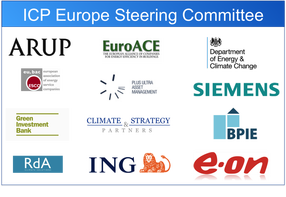
ICP Europe team has assembled a steering group from the top organizations and companies in their sectors, including ING Bank, Green Investment Bank, eu.ESCO, Plus Ultra Asset Management, ARUP, EuroACE, RdA Climate Solutions, Siemens, E.oNON, Building Performance Institute of Europe, Climate Solutions and United Kingdom Department of Energy and Climate change. 

ING Bank’s Global Head of Energy and Carbon Efficiency, Stephen Hibbert, said the bank is “enthused to be a member of the steering group and look forward to sharing our experience and playing our part in building an effective market for energy efficiency finance.”

To participate in this exciting initiative, please join the ICP Europe Technical Forum to help us choose from among the leading energy efficiency standards or support us by joining the no-cost ICP Europe Ally Network.


Introducing the ICP Europe Team

Picture
Panama Bartholomy, Director of ICP Europe

Forging partnerships among varying disciplines and stakeholders, Panama Bartholomy has managed and facilitated the creation and implementation of some of the largest climate and energy programs in the United States. Panama’s work focuses on finding policy and program solutions for communities facing energy efficiency, renewable energy, land use and climate change challenges.  Panama combines frontline experience with state and local government policy and has dealt extensively in the regulatory and utility arenas.  

Currently, Panama is Director of the Investor Confidence Project Europe, a project of the Environmental Defense Fund, where he works with a wide array of stakeholders to develop standard methodologies and protocols for energy efficiency project development and documentation. These protocols are designed to reduce transaction costs associated with energy efficiency investment, and develop actuarial data to unlock capital markets.  

Previously, Panama was the Advisor on Energy and Natural Resources to California Assembly Speaker John A. Perez where he oversaw the State of California’s energy and environmental legislation and budget. He earlier served as Deputy Director of the California Energy Commission’s Efficiency and Renewables Division and advisor for Chairmen Douglas and Pfannenstiel, worked for the California Conservation Corps on vocational environmental education, and ran the Sustainable Schools program for the Division of the State Architect. Panama served on the City of Sacramento Planning Commission and the County of Sacramento Environmental Commission, and is a former board member on the U.S. Green Building Council (USGBC) and past president of the Northern California Chapter of the USGBC.

Picture
Dr. Steven Fawkes, ICP Europe Senior Advisor

Steve is a globally recognized expert in energy efficiency and energy efficiency finance, with over 30 years of experience in the sector. He advises energy and clean-tech companies, sits on the Investment Committee of the London Energy Efficiency Fund, and is a Trustee of the National Energy Foundation. 

He was previously a Corporate Finance Partner at Matrix Corporate Capital and, earlier, led the Extel # 1 rated New Energy and Clean Technology research team at Matrix. Steve spent over 20 years implementing energy efficiency programs for many large private and public sector organizations, including local authorities and major corporates such as Diageo (Guinness), Sainsburys and GSK. He also co-founded two energy service companies, one in the UK (which is now part of RWE npower) and one in Romania. In Romania, he also developed energy efficiency programs funded by the EU, the UNDP and USAID. Steve has over 250 publications, including two books on energy efficiency, and has been an Adviser to the UK Department of Energy & Climate Change (where he assisted in establishing the Energy Efficiency Deployment Office), China’s National Development and Reform Commission and a leading Japanese engineering company. In November 2012, he won the Energy Institute’s Individual Achievement Award.

Comments

    RSS Feed

    Archives

    April 2025
    November 2024
    May 2024
    July 2023
    July 2021
    June 2019
    March 2019
    March 2018
    January 2018
    December 2017
    October 2017
    August 2017
    January 2017
    December 2016
    October 2016
    August 2016
    July 2016
    June 2016
    April 2016
    March 2016
    February 2016
    January 2016
    December 2015
    November 2015
    October 2015
    September 2015
    August 2015
    July 2015
    June 2015
    April 2015
    March 2015
    February 2015
    December 2014
    November 2014
    October 2014
    September 2014
    July 2014
    June 2014
    May 2014
    April 2014
    March 2014
    February 2014
    January 2014
    December 2013
    November 2013
    October 2013
    September 2013
    August 2013
    July 2013
    June 2013
    May 2013
    March 2013
    January 2013
    December 2012
    October 2012

    Categories

    All
    179d
    25e
    Ab758
    Benchmarking
    California Energy Commission
    Carbon Credit
    Cec
    Credentialing
    Edf
    Eepp
    Energy Software
    Femp
    Icp
    Insurance
    Leasing
    Low Income Weatherization
    Measurement And Verification
    M&V
    Pace
    Performance
    Ppa
    Risk Management
    Software
    Software Providers
    Solar
    Tax Credits
    Ump
    Uniform Methods Project
    Wap

Contact the Project