ICP
  • About
    • ICP for Programs, Financiers, and Green Banks >
      • GHG Accounting
      • Adaptive Reuse
      • Certification Timing
      • Post-Cert Changes
    • How Does ICP Work? >
      • Project Framework
      • Roadmap to IREE Certification
    • GGRF EPA Reporter
    • Tech Forum >
      • Technical Forum Blog
      • Discussion Notes
      • Call Recordings
      • Reference Documents
      • Glossary
      • Acronyms
      • Protocol Archives
    • ICP in Canada
    • Contact Us
  • Training
  • IREE Certification
    • Guide to IREE Certification
    • Commercial Protocols >
      • Large Commercial
      • Standard Commercial
      • Targeted Commercial
      • Basic / Performance
    • Multifamily Protocols >
      • Large Multifamily
      • Standard Multifamily
      • Targeted Multifamily
      • Basic / Performance
    • Project Development Specification
    • Project Registration >
      • Performance Update
    • Tools and Templates >
      • Cx, O&M, M&V Templates
      • QA Checklists
      • Building Button
    • Case Studies
  • Providers
    • Project Developer Network >
      • Join the ICP PD Network
    • Quality Assurance Assessors >
      • Join ICP's Quality Assurance Asserssors
  • Blog
    • Blog
    • ICP In the News

Energy Service Contracting Entices Cities

10/24/2012

Comments

 
Picture
The NY Times published an article today that highlights how cities are using energy service contracting to implement off balance sheet projects with guaranteed savings.  

Currently 80% to 90% of the market is in the government market.  This begs the question, if energy service contracts are such a good idea, why are they not working in the commercial real-estate market?

"Finding projects to make city buildings more energy efficient was far easier. So the city turned to a form of financing that has become common among government agencies at all levels: an energy-savings performance contract that requires no upfront costs and allows the city to pay for the project over time using the savings on utility bills.

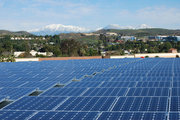
“There is no other way we could have undertaken this scope of project in this efficient a manner or time frame,” said Charlie View, Brea’s director of public works. The project included installing high-efficiency lighting systems in 14 city buildings and 4,000 street lamps, updating heating and cooling systems at six buildings and installing 1.8 megawatts of solar panels at three sites.

An energy service company, Chevron Energy Solutions, a unit of the Chevron Corporation, performed all the work and provided all the new equipment. The company’s contract with the city guarantees the project will deliver a certain level of savings on energy costs. If the project fails to perform to the guarantee, the energy service company is on the hook to make up the difference. If savings exceed the guarantee, the city keeps the excess.


READ FULL ARTICLE:  Cities Enticed by Pay-if-You-Save Energy Deals


There are a number of reasons that have limited uptake in the commercial real-estate market.  
  1. Credit issues around non-investment grade building owners (all those LLCs that own most buildings) makes extending credit for long periods problematic.
  2. Performance risk is not well understood, meaning in practice that many ESCOs take a large margin to cover the potential downside risk.  This results in projects that are priced out of the market and do not appeal to CRE customers.

There are a number of projects underway to address these risks.  

Credit risk may be solved by attaching a loan to either a utility bill as a rate tariff, the strategy in On-Bill Repayment efforts, or to the property tax bill, as seen in Commercial PACE programs.  Each effort has its own challenges but may will open up the market.

Performance risk is being addressed through the ICP project, which creates standards for what comprises an energy efficiency retrofit, and how to measure results.  Additionally actuarial efforts such as DOE's building performance database may provide the data-set that will eventually allow for managing performance risk through pools.

We are all for the public markets, but the vast majority of US building stock, representing 40% of our national carbon footprint, is currently being left on the sidelines.

Comments

On-Bill Repayment Program About to Launch in CA

10/11/2012

Comments

 
Picture
SustainableBusiness.com posted an article that outlines the upcoming CA On-bill Repayment program for commercial buildings.  Our own Brad Copithorne provided a broad range of details on this important program that could open credit markets to commercial buildings across the State.

CA Model Incentivizes Commercial Energy Efficiency
SustainableBusiness.com News

California's utilities are initiating an innovative program that makes it much more attractive for commercial properties to upgrade their energy efficiency. 

They will be allowed to pay for the upgrades over time on their utility bills and their payments will be pegged to energy savings.

It could stimulate $6 billion in private sector investment in commercial energy efficiency over the next decade, says the Environmental Defense Fund (EDF). 

In March 2013, Sempra Energy, Southern California Edison and Pacific Gas & Electric will begin offering "on-bill" repayment programs to commercial customers. 

That means property owners get access to zero-interest or low-cost financing for upgrades, which are then paid back through their utility bills.

The money can be structured as loans, leases, power purchase agreements or other types of service agreements. It can be used to pay for anything related to energy efficiency, from installing LED lighting to a new heating ventilation and air-conditioning (HVAC) system. 

What's unique about this program is that it allows third-party financing companies to be involved – expanding the pool of money available to fund energy efficiency upgrades and retrofits. 

The California Public Utilities Commission (CPUC) okayed the program earlier this year based on a proposal by the San Francisco office Environmental Defense Fund (EDF).

EDF is trying to encourage development of on-bill repayment programs across the US, says Brad Copithorne of EDF. They also think it may be possible to extend the program to  renewable energy and demand response projects. 

California's model contains these elements that EDF views as  critical to success: 

  • They "run with the meter," which accommodates changes in ownership or occupancy and allows for longer payback periods on retrofits. 
  • Partial payments will be allocated pro rata between energy and financing obligations. To collect unpaid obligations, utilities will use standard collection procedures. 
  • The program offers flexibility for contractors, project developers, lenders and other investors to design retrofit solutions and financing products that meet the needs of their customers.

This is just the latest example of how California is innovating when it comes to encouraging investment in clean energy and energy efficiency initiatives.  In late September, 14 counties and 126 cities created the nation's largest Property Assessed Clean Energy (PACE) initiative to leverage the financing model for commercial properties.

Last year, NY State approved an "on bill" payment program for residential and small business energy efficiency, opening the door for $5 billion in private investment in the state's energy economy. Governor Cuomo included it as a priority in his 2012 State of the State Address.

Read the full article

Comments

Risk Mitigation for New Energy Finance

10/9/2012

Comments

 
Picture
Energi, a leading provider of performance and other forms of insurance for the energy production and energy efficiency industries has released a report that outlines key risk factors by project type.  

The intent of the Risk Mitigation Reference Guide for New Energy Financing is to help educate the lending community about green energy projects and associated risk exposures. Uncertainties exist for alternative energy and energy efficiency around the performance of technologies and the security of future energy savings or production, leading to a conservative lending environment Further education is necessary to overcome the barriers that prevent wide-scale lending and project development. The market has shown that for these technologies and industries to reach scale, banks require enhanced underwriting practices where future project performance can be analyzed. In order to fully capitalize on industry opportunities, lenders must develop standardized underwriting guidelines that incorporate the projected future energy savings or production. To do this they must understand risk exposures that may affect project economics.
Insurance and Risk Management


A key component of new and advanced underwriting is the value of insurance in mitigating project risks and inherent uncertainties. Insurance plays a critical role by providing financial protection to various project types throughout construction and operational phases. Similar to other construction or energy markets, adequate insurance protection is crucial to guard against risk exposures, ensure proper project performance and protect the financial interests of all parties involved. Application of adequate risk protections through insurance will further encourage the continued success and growth of the clean energy and energy efficiency markets.


Check out the Executive Summary at:
http://www.energi.com/docs/webinar/Green-Lending-Risk-Protection-Insurance-Executive-Breifing.pdf

Download the complete report at:
http://www.energi.com/alt_webinar.php


Comments

EDF "Leveraging Data to Move Markets" Meeting Featured on Greentech Enterprise

10/8/2012

Comments

 
What’s a Deep Energy Efficiency Retrofit Anyway?

The practical challenge with deep retrofits is that they’re really complex to model—which makes them harder for customers to believe.

JON GUERSTER : OCTOBER 8, 2012

Last week I attended an EDF-sponsored workshop discussing the firm's new Investor Confidence Project (ICP). The ICP is focused on encouraging more lenders to finance the building energy efficiency market.

Just as mortgage-backed lenders need evidence that underlying mortgages are being paid, lenders for comprehensive energy efficiency projects need data to show that these loans will “perform.” So the ICP asks market participants to voluntarily provide their current energy project performance data using their newly developed Energy Efficiency Performance Protocol (EPP). The EPP gives everyone a standard way to present their energy savings performance, which allows this anonymous, pooled data to be reported to the investor community.

With a focus on comprehensive building energy savings, the EPP defines deep retrofits as “projects with sufficient depth necessary for pre- and post-retrofit meter data yields (i.e., savings can be anticipated to be of greater magnitude than noise).”

Read Complete Post on GREENTECH ENTERPRISE

Comments

CPUC Hearing on Energy Data Access

10/8/2012

Comments

 
Picture
The CPUC will be having a workshop on October 12th to address access to energy data.  Access to energy data is the cornerstone of a market where both demand and supply can be treated as a resource.  

Workshop Agenda

There is an associated white paper.  DOWNLOAD

Comments

CEC Releases AB758 Scoping Report

10/8/2012

Comments

 
Picture
The CEC has released the scoping report outlining their plans to move towards regulating existing buildings to reduce energy.  

Read the full AB758 Scoping Report.

Comments

California Energy Commission Hold AB758 Hearings

10/6/2012

Comments

 
CEC holds first AB758 Hearings in Sacramento on Oct 8th and 9th.  This is big stuff, AB758 gives the CEC the authority to regulate energy in existing buildings.  The outcomes of this process will shape California's energy future.

Find out more:  http://www.energy.ca.gov/ab758/notices/2012-10-08-and-09_Staff_Workshop.pdf

AB758 Basics:
In 2009, AB 758 was enacted, authorizing the first program in the country to address the energy efficiency of existing buildings at the statewide level. The California Energy Commission, a long-time world leader in energy efficiency standards, is now poised to address the substantial opportunity to conserve energy present in California’s existing building stock.

The Energy Commission is conducting a two-day workshop to solicit input and gain insight from stakeholders on where the greatest market barriers and opportunities exist. You are invited to contribute to the foundation of these new comprehensive programs for existing buildings. The workshop will address the questions in the agenda. Please be prepared to discuss your comments on these questions.

Background documents may be found on the Energy Commission’s website:
http://www.energy.ca.gov/ab758/documents/index.html

The Energy Commission invites you to subscribe to the Existing Buildings (AB 758 Comprehensive Energy Efficiency Program for Existing Buildings) List Serve to get the most up to date information about this program:
www.energy.ca.gov/efficiency/listservers.html
Comments

Selling Carbon Credits to Pay for Building Energy Retrofits

10/6/2012

Comments

 
National Association for State Community Services (NASCS) is leveraging innovative work coming out of Maine, that has turned gas savings in their state into carbon credits they are selling on the pre-compliance markets.  NASCS is working on national standards to quantify carbon credits for the ailing low income weatherization program.  This will create a valuable new revenue stream at a time when this program that as funded at $5B during the ARRA period, but is now being cut back drastically, even below pre-ARRA funding levels.


Clearly creating carbon credits is a short leap from quantified energy savings.  We at ICP see emerging carbon markets as potential new revenue sources for properly documented energy savings.

Read the article in Forbes
Comments

Are Building Owners Leaving Money on the Energy Efficiency Table?

10/3/2012

Comments

 
Our own Elizabeth Stein was a guest blogger on the Sallan Foundation snapshot, where she discusses some of the key barriers to achieving energy savings in commercial buildings and asks the question, "are we leaving money on the table?"

View the complete article on Sallan's website.
Comments

    RSS Feed

    Archives

    April 2025
    November 2024
    May 2024
    July 2023
    July 2021
    June 2019
    March 2019
    March 2018
    January 2018
    December 2017
    October 2017
    August 2017
    January 2017
    December 2016
    October 2016
    August 2016
    July 2016
    June 2016
    April 2016
    March 2016
    February 2016
    January 2016
    December 2015
    November 2015
    October 2015
    September 2015
    August 2015
    July 2015
    June 2015
    April 2015
    March 2015
    February 2015
    December 2014
    November 2014
    October 2014
    September 2014
    July 2014
    June 2014
    May 2014
    April 2014
    March 2014
    February 2014
    January 2014
    December 2013
    November 2013
    October 2013
    September 2013
    August 2013
    July 2013
    June 2013
    May 2013
    March 2013
    January 2013
    December 2012
    October 2012

    Categories

    All
    179d
    25e
    Ab758
    Benchmarking
    California Energy Commission
    Carbon Credit
    Cec
    Credentialing
    Edf
    Eepp
    Energy Software
    Femp
    Icp
    Insurance
    Leasing
    Low Income Weatherization
    Measurement And Verification
    M&V
    Pace
    Performance
    Ppa
    Risk Management
    Software
    Software Providers
    Solar
    Tax Credits
    Ump
    Uniform Methods Project
    Wap

Contact the Project