
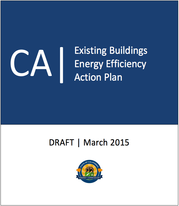
Assembly Bill 758 (Skinner, Chapter 470, Statutes 2009) requires the Energy Commission, in collaboration with the California Public Utilities Commission and stakeholders, to develop a comprehensive program to achieve greater energy efficiency in the state’s existing buildings.
The Energy Commission foresees implementing AB 758 in three phases. The first phase began with the American Recovery and Reinvestment Act of 2009 (ARRA) implementation period (2010-2012). The Energy Commission’s ARRA-funded pilots supported energy efficiency efforts through state and local upgrade programs, workforce training, and financing.
The Energy Commission foresees implementing AB 758 in three phases. The first phase began with the American Recovery and Reinvestment Act of 2009 (ARRA) implementation period (2010-2012). The Energy Commission’s ARRA-funded pilots supported energy efficiency efforts through state and local upgrade programs, workforce training, and financing.
| ICP is very pleased to have been included in the newly released California’s Existing Buildings Energy Efficiency Action Plan that lays out a course forward for California to achieve the great potential of energy efficiency in existing buildings. | 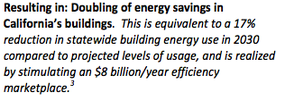 |

Efficiency is first in the loading order for energy investment because it is cheaper than expanding electric and gas supplies. Reaching the policy goal for building energy efficiency upgrades is estimated to require investment of at least $ 8 billion per year, with private capital accounting for the majority.126 Currently, $1.4 billion a year is spent by utility ratepayer incentive funds and building owner investments. This amount is not sufficient to achieve California’s energy and climate goals, and means that solutions must leverage private capital.
Therefore, state agencies must adopt policies and support actions that will catalyze the private market. Current finance products used for efficiency are primarily one‐off, unsecured loans with short terms and high interest. Efficiency is not typically incorporated into long‐term mortgage debt. New long-term finance programs are needed that match cash flow benefits with lower risk‐informed interest rates based on robust data from loan repayment histories of large portfolios of efficiency‐specific transactions. Essentially, efficiency needs the kinds of finance programs that the solar industry has created.
Therefore, state agencies must adopt policies and support actions that will catalyze the private market. Current finance products used for efficiency are primarily one‐off, unsecured loans with short terms and high interest. Efficiency is not typically incorporated into long‐term mortgage debt. New long-term finance programs are needed that match cash flow benefits with lower risk‐informed interest rates based on robust data from loan repayment histories of large portfolios of efficiency‐specific transactions. Essentially, efficiency needs the kinds of finance programs that the solar industry has created.
| The investment community has emphasized that to invest in energy efficiency project finance they need more project standardization, and reliable financial and energy performance data. The Environmental Defense Fund sponsors the Investor Confidence Project (ICP) to address these needs. The standardization facilitated by the ICP is the first step in creating an asset class of energy renovation projects that can attract large scale capital. The ICP is being considered in New York, Texas, Connecticut, Europe, and California, as part of Commercial PACE, benchmarking, and utility finance programs. As California increases commercial and multifamily retrofit programs, the ICP represents a best practice that can align efforts and help establish a consistent statewide market for energy efficiency project finance. | 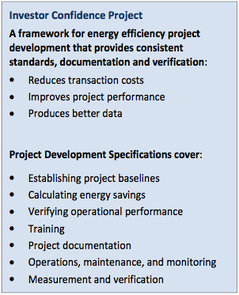 |
AB 758 is proposed to achieve in 3 stages:
Phase 1: Infrastructure Development & Implementation Plan
The California Energy Commission gathered relevant lessons learned from ARRA, researching market conditions, and working with technical support consultants to develop an understanding of the market. This Scoping Report is the result of this overall research effort and is intended to be a high-level summary of major gaps and needs in the marketplace.
The newly released California’s Existing Buildings Energy Efficiency Action Plan defines major goals and strategies of the AB 758 program, articulate solutions for addressing needs identified in the Scoping Report, and develop a roadmap for implementation of the program
Phase 2: Market Development & Partnerships
Phase II of the program will involve implementation of the near-term activities identified in the Action Plan, including any necessary market development to support energy efficiency programs (for example, tools, workforce development, additional market analysis, etc.) A major activity in this phase will be identifying industry and agency partners and defining and developing collaborative relationships.
Phase 3: Statewide Ratings & Upgrades Requirements
This third phase of the program will help transition voluntary program approaches and market maturity into regulations when and where identified as appropriate to accomplish the goals of the AB 758 program.
Phase 1: Infrastructure Development & Implementation Plan
The California Energy Commission gathered relevant lessons learned from ARRA, researching market conditions, and working with technical support consultants to develop an understanding of the market. This Scoping Report is the result of this overall research effort and is intended to be a high-level summary of major gaps and needs in the marketplace.
The newly released California’s Existing Buildings Energy Efficiency Action Plan defines major goals and strategies of the AB 758 program, articulate solutions for addressing needs identified in the Scoping Report, and develop a roadmap for implementation of the program
Phase 2: Market Development & Partnerships
Phase II of the program will involve implementation of the near-term activities identified in the Action Plan, including any necessary market development to support energy efficiency programs (for example, tools, workforce development, additional market analysis, etc.) A major activity in this phase will be identifying industry and agency partners and defining and developing collaborative relationships.
Phase 3: Statewide Ratings & Upgrades Requirements
This third phase of the program will help transition voluntary program approaches and market maturity into regulations when and where identified as appropriate to accomplish the goals of the AB 758 program.
 RSS Feed