
ICP
  • About
    • ICP for Programs, Financiers, and Green Banks >
      • GHG Accounting
      • Adaptive Reuse
      • Certification Timing
      • Post-Cert Changes
    • How Does ICP Work? >
      • Project Framework
      • Roadmap to IREE Certification
    • GGRF EPA Reporter
    • Tech Forum >
      • Technical Forum Blog
      • Discussion Notes
      • Call Recordings
      • Reference Documents
      • Glossary
      • Acronyms
      • Protocol Archives
    • ICP in Canada
    • Contact Us
  • Training
  • IREE Certification
    • Guide to IREE Certification
    • Commercial Protocols >
      • Large Commercial
      • Standard Commercial
      • Targeted Commercial
      • Basic / Performance
    • Multifamily Protocols >
      • Large Multifamily
      • Standard Multifamily
      • Targeted Multifamily
      • Basic / Performance
    • Project Development Specification
    • Project Registration >
      • Performance Update
    • Tools and Templates >
      • Cx, O&M, M&V Templates
      • QA Checklists
      • Building Button
    • Case Studies
  • Providers
    • Project Developer Network >
      • Join the ICP PD Network
    • Quality Assurance Assessors >
      • Join ICP's Quality Assurance Asserssors
  • Blog
    • Blog
    • ICP In the News

Upcoming Presentation at AEE's West Coast Energy Management Congress - June 3rd, Long Beach, California

4/29/2015

Comments

 
Picture
Recent News: 
Tracy Phillips, technical lead for the Investor Confidence Project (ICP), will present on the ICP protocols and the ICP Project Developer and Quality Assurance Credentialing program at the Association of Energy Engineers Energy Management Congress in Long Beach, CA on June 3rd. The session, entitled "Building Investor Confidence Through Standardization" is on Wednesday, 5/3, at 2 pm Pacific time. You can register for the event and use the code "EMC15SPEAKER" to receive a $200 discount. Hope to see you there!
Comments

BEDES v1.1 and CBECS 2012 Just Released

4/13/2015

Comments

 
Picture
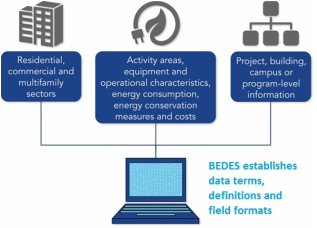
The Office of Energy Efficiency & Renewable Energy, on April 13th, 2015, officially released the Building Energy Data Exchange Specification (BEDES) version 1.1. The specification provides a dictionary of terms, definitions, and field formats that is intended to facilitate the exchange of information on building characteristics and energy use.

The ICP, which promotes standardization, has supported efforts in the development of this specification, and recommends adherence to the specification regarding collection and reporting of building asset, operational and performance data. BEDES will also provide a consistent platform for use in ICP's future Open Energy Data Initiative, which is currently under development. 

On another front, the US Energy Information Administration released the first 2012 Commercial Buildings Energy Consumption Survey (CBECS) detailed tables. These resources are referred to in the ICP regarding the development of end-use energy use estimations in the baselining efforts.

The release includes the first 14 building characteristics Detailed Tables, as well as an accompanying report and survey methodology information. The remaining characteristics data are planned for release, according to their website, in late April and May of this year.

Comments

QA Technical Forum Meeting - February 27th, 2015

2/27/2015

Comments

 
Picture
The ICP Technical team continued discussions regarding the ICP Quality Assurance (QA) Credential on February 27th, 2015. The Team is working to have a version 1.0 of the QA Provider Credential, as well as the associated QA Specification and QA Checklist prepared by the end of March. With this goal in mind, the discussions focused on what the QA process should involve. The following are highlights from the conversation with the Technical Forum:

  • On traditional projects currently, reviewers are brought on at different stages of a project, often late in a project's development, and there is much effort simply placed on finding the information necessary for the QA efforts. This information is also not usually in a standardized format, regarding calculations, reports, etc. 
  • While the ICP does not require specific formats for information, it does standardize, through references to existing guidelines and standards, the information that needs to be collected, and that proper documentation needs to be provided.
  • Reasonableness - when a reviewer looks at the assumptions used in a project, what can be defined as reasonable? There was consensus that there are not many resources currently available to assist with these efforts. These resources may be developed in the future, but are not currently available. The best resource that the market currently can offer is the experience of the QA provider. While this will vary, ICP makes an attempt to bring some criteria to bear on this resource, through its QA Provider Credential Requirements (refer to notes from the meeting on 2/9/15).
  • Who pays for the QA efforts? - This can be a program, or the building owner, or the financier, or the developer. The fact is that these costs are already incurred by projects, and the review may even happen multiple times on a project by different parties involved. ICP works to standardize these efforts, so that it is a one-person / firm exercise, with direction regarding the expectations and the process to employ.
  • What happens if a QA provider and a PD cannot agree on what is reasonable? - The building owner or the financier has the final decision regarding whether a project can/should move forward. The QA provider and PD need to take a collaborative approach to the review efforts - review / comment / resolve. If a resolution cannot be managed, the project can still move forward. Documentation will be provided as a result of these QA efforts that will establish issues that were identified, and whether or not they were resolved. This will allow stakeholders to reflect on projects that did or did not perform, with documentation illustrating what was identified during the QA process, and how it was addressed or not addressed.
  • Fundamentally, the ICP QA process focuses on ensuring that a project complies with the ICP protocols. This is a binary process, and can be accomplished by filling out the ICP checklist. And to a certain extent, this is what financiers want to see - did the project follow the ICP process or not? 
  • So should the QA provider be addressing the "assumptions" piece? Essentially, should the "assumptions" piece be dropped from the QA provider's role? This is an important component of the QA provider's value, and though not well defined by the industry with regards to what is reasonable, it is an important aspect of the review process. ICP can only base reasonableness on the experience and credentials of the QA providers, until the marketplace matures and better guidelines are available to provide more direction on this front.
Comments

Hurry - Hurry... ICP Seeks Final Feedback for ICP QA Provider Credential!

2/25/2015

Comments

 
Picture
The Investor Confidence Project (ICP) is seeking final input from all interested stakeholders on the development of the soon to be released ICP Quality Assurance Provider Credential in a virtual Technical Forum event this Friday, February 27 th.  

The introduction of this credential will complete the ICP Credentialing System and enable a workflow for the creation of Investor Ready Energy EfficiencyTM  (IREE) projects that conform to the ICP Protocols. The system combines the use of accepted standards, credentialed Project Developer and Software providers, and independent third party verification resulting in IREE projects that provide investors and building owners with a new level of confidence in project performance and investment returns.   

If you are interested in helping ICP to develop the optimal QA process and toolset, please participate in the upcoming working session or contact us directly with your feedback.  

The upcoming meeting will take place on February 27th at 8am Pacific / 11a Eastern and can be accessed at  (web presentation) https://join.me/investorconfidenceproject and (dial-in) +1.415.655.0381  /   Access Code 830-557-067#.  This meeting will focus on the agenda items, but ICP is still incorporating feedback on the draft QA Credential guidelines and toolset which can be accessed in the Technical Forum portion of EEperformance.org.

Please contact us if you have any questions, suggestions, or interest in participating in the ICP Credentialing Provider System at [email protected].

Comments

Upcoming Presentation at GLOBALCON in Philadelphia

2/24/2015

Comments

 
Picture
Tracy Phillips, technical lead for the Investor Confidence Project (ICP), will present on the ICP protocols and the ICP Project Developer and Quality Assurance Credentialing program at the GLOBALCON conference in Philadelphia on March 17th-18th. The session, entitled "Building Investor Confidence" is on Wednesday, 3/18, from 2 pm - 4 pm eastern time. You can register for the event and use the code "GC15SPEAKER" to receive a $200 discount. 


Hope to see you there!
Comments

What Does Reasonable Mean?

2/23/2015

Comments

 
The Investor Confidence Project is currently in the process of developing its Quality Assurance (QA) Provider credential. One topic of debate has involved the role of a QA Provider (or technical reviewer) with regards to “reviewing methodologies, assumptions and results to ensure that they follow best practices and are reasonable.”

So what does “reasonable” mean?

When the LEED rating system was first developed, I started supporting projects by developing Measurement and Verification (M&V) plans to satisfy the M&V Credit. I submitted about 20 of these plans for different projects, essentially following the same format every time, with variations on some of the details, depending on the measures and building systems involved. Of these plans, some were accepted outright, some were returned with a few issues, and a few were returned with many questions and items to address.

In some cases, comments I received from the reviewers directly contradicted comments I had received previously!  Essentially, there was little consistency in the review process that was applied.

This experience is not limited to LEED certification projects of course. The same experiences occurred when I was involved with utility-sponsored programs, in which calculation assumptions or model calibration values were challenged in some cases, and the same inputs left unchallenged in others.

In the development of energy efficiency projects, there are many items that can be interpreted by reviewers as being reasonable or unreasonable. This can range from savings calculation assumptions, energy model inputs, calibration methods, or adjustments during the M&V process, among others.

Most reviewers we have talked to have said that there is little direction with regards to how to perform a review. Moreover, there are rarely guidelines for assumptions to use when information is not known.

So how do you determine what is reasonable? Can assumptions be standardized for savings calculations? Are there resources that have established these assumption ranges for different types of measures, systems, or regions? Were these established just for simple measures, or are their guidelines for complex measure assumptions? Are there specific calibration guidelines that can be used or referenced to limit model calibration inputs?

And, how far should the review process go? At some point, this review process broaches on re-engineering, and the scope of the review process becomes cost-prohibitive and overly cumbersome, stifling efficient project development. Where do you draw the line? What experiences have you had, good or bad, regarding technical reviews?

The challenge is to define, as specifically as possible, what is reasonable, conservative, and defensible. The ICP Technical Team wants to hear what you think - can this be done, and what resources are you aware of that are currently available, or under development, to help with this process? Or is “technical reviewer experience” simply the best and only option the industry can offer?

Like the protocols themselves, our intent is to develop a balanced approach to the quality assurance process that is thorough, yet efficient. One that meets the needs of the key stakeholders, protects their interests and investment, without over-encumbering a project with costs and complexity.

So please send us your thoughts!

ICP Technical Team  
Comments

ICP Quality Assurance Technical Forum Recap - February 9, 2015

2/9/2015

Comments


Tech Forum

Recording
February 9, 2015
The ICP Technical team continued discussions regarding the ICP Quality Assurance Credential on February 9th, 2015. The discussions involved finalizing the requirements of a credential ICP Quality Assurance Provider, review of the QA checklist, and discussion about the term "Quality Assurance" and if it is appropriate. The following are highlights from the conversation with the Technical Forum:
  • It was agreed by the group that the credential requirements are appropriate. The agreed-upon requirements are listed at the end of these notes.
  • Use of the PE - the use of a signature or stamp is interchangeable. And, this signature or stamp on an IREE project reflects the following: "The seal is not, and should not be considered, a certification mark or warranty of correctness. According to the Supreme Court (Edgeworth Construction Ltd. v. N. D. Lea & Associates Ltd.), the “seal attests that a qualified engineer prepared the document. It is not a guarantee of accuracy”. Instead, it should be considered a “mark of reliance”, an indication that others can rely on the fact that the opinions, judgments, or designs in the sealed documents were provided by a professional engineer held to high standards of knowledge, skill and ethical conduct."
  • Essentially, the PE's signature ensures that the project was performed by or under the supervision of the PE, that it conforms to the ICP, and that all attempts have been made to prepare the project using appropriate best-practices and methodologies, and that the assumptions and results appear reasonable. "The seal is not, and should not be considered, a certification mark or warranty of correctness”.
  • Checklist - it was agreed upon that the checklist draft is accurate and useful. The general sentiment is that it is thorough, and even "impressive," but not overbearing. That is, project developers typically perform all of these activities (or should do all of this, and this is agreed).
    • Need to incorporate a statement at the bottom of the checklist that attests to what it means for the PE to sign off on the project.
  • All participants agreed to the term "Quality Assurance Provider." As opposed to Quality Management or Quality Control, or something else. There are other terms for this service used in the industry, like Technical Reviewer," but in general, this term seems appropriate and applicable

Quality Assurance Provider Credential Requirements
  • Can be an individual, an independent firm, or a program
  • Must be a PE (if an individual) or have a PE on staff to oversee and approve all review efforts (if a firm)
  • Minimum of five years of relevant energy efficiency project development experience, and three years quality assurance review experience, documented in the form of a CV outlining relevant project experiences
  • Must provide three references demonstrating relevant project development and quality assurance review experience
  • Must attend the ICP Credentialed Project Developer training
  • Must complete the ICP Credentialed Quality Assurance Provider training
  • Primary responsibilities include:
    • Ensure that the project was developed according to the ICP Energy Performance Protocols leveraging the ICP Project Development Specification and QA Checklist
    • Check that methodologies, assumptions and results follow best practices and are reasonable
PLAY: Recorded Call
Comments

Two Important ICP Events This Week!

2/8/2015

Comments

 
The ICP Technical Team will be hosting a Technical Forum call on Monday, February 9th, at 11 am ET, to continue discussions regarding the development of the Quality Assurance (QA) Provider Credential. The forum will discuss QA credential requirements, review the QA checklist, and discuss the QA process. New participants welcome!

The team is also hosting its third Project Developer Credential training on Tuesday, February 10th at noon ET. It's not too late to register for this event!
Comments

ICP Quality Assurance Technical Forum Call Recap - 1/27/15

1/27/2015

Comments

 
Picture
Click to Watch Recorded Technical Forum
The ICP Technical Team hosted a Technical Forum call (you can catch it HERE), to discuss what it means to be a Quality Assurance (QA) Provider, what the ICP should require, as well as what requirements the ICP  QA Provider Credential should include. The ICP Team will be hosting subsequent discussions on Feb 9th and Feb 27th at 11 am EST to continue these discussions, and develop "version 1.0" of this ICP QA Provider Credential, tentatively set for release and incorporation into the ICP Credentialing system by the end of March.
The following are highlights from the discussions:
  • The ICP QA Provider must ensure that a project was developed according to the ICP Energy Performance Protocols leveraging the ICP Project Development Specification and the QA Checklist. And, the QA Provider must check that methodologies, assumptions and results follow best practices and are reasonable.
  • The risk associated with a project or a measure drives the level of review detail necessary. The QA effort is all about risk mitigation.
  • The QA provider experience is key. If the credentialed project developer (PD) follows ICP, it will reduce review time. Standardization plays a big part in the efficiency and effectiveness of the review process.
  • Projects are complex - the review process is difficult to define discretely. Reviewer's experience is paramount in the process.
  • Many investors already require a PE; for the QA provider, ICP wants to establish a higher bar than PD. The PE license is  important for QA. However, being a PE does not mean they know about energy efficiency (EE) projects. And, PE’s are more experienced but more expensive. Some large firms have lots of experience but not necessarily PE's on staff. But consensus is that the review process must be performed with oversight from a PE, however the work itself can be done by other staff, ideally with specific certifications pertaining to the areas of the project they are reviewing (CEM, BEMP, CMVP, etc.).
    • Make it clear that this review process should involve the PE overseeing the work, with others performing the actual review (those that have specialized skills for different EE project components)
    • Review associated with programs in NY, MA, NJ, CT - None of these programs require that the review is performed by a PE, but they require that it is performed with oversight by a PE (or registered architect)
    • Should the stamp be required? Some investors do require this. Without this requirement, many investors may push back - there is little risk associated with doing a review on the reviewer's part.  
    • Is "signing off" by the PE  enough, and how does this really differ from a PE stamp? - The QA provider is not saying that the project will perform.
    • Require five years of QA experience rather than PD experience? Maybe 5 years relevant EE PD experience, and 3 years QA experience?
    • Should ICP require certifications for the different components of an EE project review? Energy modeling, M&V, Cx, etc? This may be too restrictive, as some certifications, such as energy modeling for example, are still not well established in the industry.
    • Should there be difference requirements for targeted projects versus larger, more comprehensive projects?
  • PE STAMP: 
  • For the public, the seal constitutes the distinctive mark of the professional engineer. It must be used to identify all work prepared by, or under the direct supervision of, a professional engineer as part of professional engineering services rendered to the public. It assures the document’s recipient that the work meets the standards of professionalism expected of competent, experienced individuals who take personal responsibility for their judgments and decisions. The seal is important because it is a visible commitment to the standards of the profession and signifies to the public that a particular P.Eng. accepted professional responsibility for the document. Affixing the seal to a document is a statement by a professional engineer to others that they can, with a high degree of confidence, depend upon the contents of the document for the furtherance of their projects. Since the outcome of a project depends on factors beyond the control of an engineer, however, a successful outcome cannot be guaranteed by an engineer. The seal is not, and should not be considered, a certification mark or warranty of correctness. According to the Supreme Court (Edgeworth Construction Ltd. v. N. D. Lea & Associates Ltd.), the “seal attests that a qualified engineer prepared the document. It is not a guarantee of accuracy”. Instead, it should be considered a “mark of reliance”, an indication that others can rely on the fact that the opinions, judgments, or designs in the sealed documents were provided by a professional engineer held to high standards of knowledge, skill and ethical conduct.
  • Suggestion of how to define the QA Provider requirements:
    • Can be an individual, an independent firm, or a program
    • Must be a PE (if an individual) or have a PE on staff to oversee and approve all review efforts (if a firm)
    • Minimum of five years of relevant energy efficiency project development experience, and three years quality assurance review experience, documented in the form of a CV outlining relevant project experiences
    • Must attend the ICP Credentialed Project Developer training
    • Must complete the ICP Credentialed Quality Assurance Provider training
    • Primary responsibilities include:
      • Ensure that the project was developed according to the ICP Energy Performance Protocols leveraging the ICP Project Development Specification and QA Checklist
      • Check that methodologies, assumptions and results follow best practices and are reasonable
Watch Recorded Technical Forum
Comments

Why ICP Does Not Use IPMVP Option D Calibrated Simulation

1/18/2015

Comments

 
Currently ICP does not allow the use of an IPMVP option D calibrated simulation for Measurement and Verification (See ICP Quick Reference). The Large Commercial/Multifamily protocol requires the use of an IPMVP Option C, Whole Facility measurement and verification (M&V) approach. While the Standard and Targeted protocols require Options A or B, Retrofit Isolation approaches.

The ICP Team has been asked on occasion "what happened to Option D, Calibrated Simulation?" We are using a calibrated simulation as the calculation method for Large (and sometimes Standard) projects after all. So why is this M&V approach excluded from the list of M&V options?

Understanding IPMVP

Picture
click to enlarge
The fact is that Option D is primarily intended for new construction projects; essentially, projects in which there are no baseline data available (utility data). The energy model is used to estimate energy use for the proposed building, since none exists. The actual performance of the building, once it is built, is then compared to this estimate of energy use generated by the energy model.

Conversely, the ICP is designed to address the retrofit of existing buildings; buildings that have utility data - which can be used to develop an actual baseline for the building. So the Option D approach is unnecessary.

However, this does not mean that the calibrated simulation’s usefulness ends after the savings projections have been established. The model can and should still play a part in the M&V process. For most if not all M&V efforts, non-routine adjustments need to be made to the baseline, to reflect unanticipated changes in the building’s energy use after the retrofits have been completed. Adjustments such as increased occupancy, new internal loads, added square footage, etc. These items affect heating and cooling loads, and building energy use, and need to be calculated and essentially subtracted from or added to the baseline, so that it can be accurately compared to the post-retrofit energy use in an Option C approach.

Calculation of the effects of these adjustments on the building’s energy use can be challenging, especially adjustments that affect the loads in the building, and have potentially complicated interactive effects with the building’s HVAC systems. The calibrated energy model can subsequently be used to estimate these effects on energy use, in a more comprehensive and accurate manner than spreadsheet calculations or other methods.

If a modeling approach is used for a Standard project type, again, it can and in fact needs to be used in an Option A or B M&V approach. Options A and B assess the performance of energy conservation measures. If the measures are operating as expected, nothing else needs to be done. However, if the measures are not operating as expected, these variations in operation need to be quantified, so that “verified” energy savings can be calculated. Thus, if an energy model was used for the original savings calculations, this same model needs to be adjusted with the observed / measured variations in operation, so that the revised or verified energy savings can be calculated.

Does Option D have a place in existing building retrofit projects? The answer is yes, but it is mainly applied only when there is no baseline data available for the building. For example, a centrally-metered campus of buildings where no individual building meter exists. 

Energy modeling represents an important tool in energy efficiency project development. It is used to estimate energy savings, and can also be applied to determine the effects of non-routine adjustments or to calculate verified energy savings in the M&V effort. However, the ICP requires a baseline developed from actual historical utility data, a requirement that excludes the use of an Option D approach to M&V.
Comments
<<Previous
Forward>>

    Follow Tech Forum Blog:


    Curated by:

    Tracy Phillips
    ICP Technical Lead


    Archives

    May 2016
    March 2016
    December 2015
    September 2015
    August 2015
    April 2015
    February 2015
    January 2015
    December 2014
    October 2014
    August 2014
    July 2014
    June 2014
    May 2014
    April 2014
    March 2014
    February 2014

    Categories

    All
    Data Access And Management
    Large Commercial
    Quality Assurance
    Standard Commercial

    RSS Feed

Contact the Project